
Fowl Pox
Disclaimer
I am not a veterinarian. The advice and information presented here are based on my personal experience and observations within my flock. Please use this information at your own discretion, and always consult a qualified veterinarian for professional advice on managing poultry health issues
What is Fowl Pox?
Fowl pox is a viral disease that affects poultry and other birds, caused by an avipoxvirus from the Poxviridae family. The disease spreads through mosquitoes and direct contact with infected birds or contaminated surfaces. While preventive measures, such as vaccination, exist, fowl pox can persist in the environment. Infected birds become immune after recovery, and although there is no cure, symptoms can be managed to reduce discomfort and prevent complications.
Types of Fowl Pox
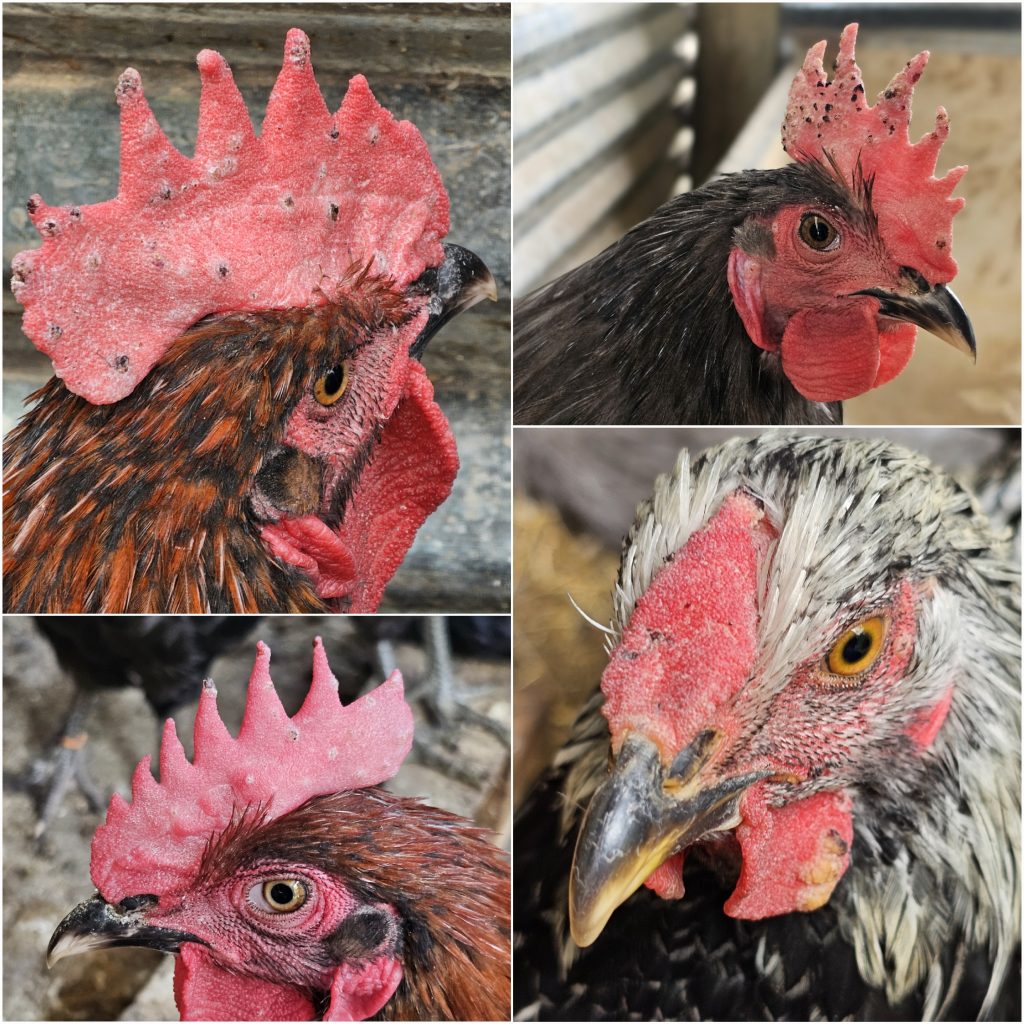
The disease manifests in two forms: dry pox (cutaneous) and wet pox (diphtheritic). The viral infection typically lasts for 2 to 4 weeks before most birds recover.
- Dry Pox: This milder form is characterised by wart-like lesions on the skin, especially on the comb, wattles, eyelids, and occasionally the legs. These lesions eventually scab over and fall off. Dry pox is rarely fatal unless secondary infections occur.
- Wet Pox: The more severe form affects the mucous membranes of the mouth, throat, and respiratory tract. It can obstruct airways, making breathing, eating, and drinking difficult. Wet pox carries a higher risk of mortality due to its impact on vital functions.
Preventive Measures for Fowl Pox
Vaccination
Vaccination is the most effective preventive measure against fowl pox. While vaccinated birds may still contract the disease, their symptoms are usually much milder.
- When to Vaccinate: You should have all in your flock that is old enough to be vaccinated, vaccinated by November. I start vaccinating in September. Then I vaccinate all new chicks that are old enough once a month. Chickens are typically vaccinated once, usually from 6 to 8 weeks of age, depending on the vaccine manufacturer. The immunity provided is generally long-lasting, and routine annual vaccination is not usually required unless advised by a veterinarian or the vaccine manufacturer. The Zoetis Poulvac AE + Pox vaccine I give from 6 weeks and up.
- How to Vaccinate: Vaccination is administered via the wing-web method. A two-pronged applicator or an 18G needle introduces the vaccine into the wing tissue. Successful vaccination is indicated by swelling or scabbing at the injection site after one week.
- The Vaccine: The vaccines often comes in 1000 or 2500-dose vials and should be used promptly after mixing, usually within an hour, as per the manufacturer’s instructions. Planning is essential, especially for large flocks. Check with suppliers in advance for availability of different dose sizes.
- Confirming Successful Vaccination: Perform spot checks at the vaccination site 5 to 10 days after vaccination. Swelling and a scabbed appearance indicate that the vaccination was successful.
- Instructional Resource: Watch this video for guidance.
Also see How I Vaccinate My Chickens Against Fowl Pox .
Vaccination Efficacy
The most commonly used vaccine for fowl pox is a live attenuated vaccine, containing a weakened form of the virus to stimulate an immune response without causing the full disease. This vaccine effectively elicits strong, long-lasting immunity.
Mosquito Control
Effective mosquito control is crucial in preventing the spread of fowl pox, as mosquitoes are a primary vector for the disease. Here are measures to help control mosquitoes around your flock:
- Mosquito Nets: Install mosquito nets around brooders, coops, and breeding areas to create a physical barrier against mosquitoes.
- Mosquito Repellent Units: Mosquito liquid and mats plug-in units from brands like Peaceful Sleep and Doom in indoor brooder spaces.
- Eliminate Standing Water: Mosquitoes breed in standing water. Remove these sources or treat them to prevent larvae development. Introducing biological controls such as fish into ponds can help consume mosquito larvae.
Managing a Fowl Pox Outbreak
Even with vaccination, outbreaks may still occur. Prompt management of symptoms and proper care can mitigate the severity of the disease, especially during an outbreak in an unvaccinated flock.
Isolation
Separate affected birds and use separate equipment where practical. Shed scabs can stay infectious, so remove contaminated material carefully and clean and disinfect housing and equipment.
Treating Symptoms
While there is no cure for fowl pox, symptoms can be managed to prevent complications. This is how I managed dry pox.
- Topical Treatments: Apply gentian violet or povidone-iodine to lesions to help suppress the virus and promote healing.
- Antibiotics: Antibiotics may be used to prevent or treat secondary bacterial infections. While antibiotics do not affect the fowl pox virus, they can reduce complications in birds with stressed immune systems. In my experience it was the secondary infections that killed my chickens.
General Care
Ensure that infected birds have continuous access to clean water and a nutritious diet. This is particularly important for birds suffering from wet pox, as they may have difficulty eating or drinking. Providing supportive care and monitoring their intake is essential during this period.
Care of Chicks
Chicks are more vulnerable when contracting fowl pox, especially the wet form. With proper care, including supportive nutrition and prevention of secondary infections, their chances of survival can improve. Consult a veterinarian to assess severely affected chicks and discuss the most humane options for their care.
My experience with fowl pox
First outbreak in January and February 2024
In November 2023, I ordered my first fowl pox vaccine, opting for the 100-dose vial. However, I was informed it was on backorder. By the new year, with no sign of the original order, I decided to purchase the 1,000-dose variant. At that point, I had kept chickens at my current location for two years without any cases of fowl pox. Ironically, in mid-January 2024, while still waiting for the vaccine, I noticed the first signs of fowl pox among my grow-out chickens, aged between 10 and 18 weeks. The vaccine arrived the following day, and I discovered I only had one hour to administer it. Given the time constraint, I prioritised my most vulnerable and valued birds and vaccinated as many as possible within the hour. I decided not to vaccinate the camp where some cases had already appeared, as those chickens were also showing mild signs of respiratory illness. I was unable to isolate the affected birds due to their increasing numbers, and with so many already showing symptoms, isolation wasn’t practical. I ordered additional vaccine supplies, but by the time they arrived, a full outbreak had emerged in my main grow-out camp. Fortunately, I managed to vaccinate the remainder of my flock without the virus spreading to other camps.
During that outbreak I saw no cases in the chick nursery, where I kept chicks under six weeks and ran a mosquito repellent continuously.
Among more than 200 vaccinated birds, I observed mild signs in four about three weeks after vaccination. The lesions cleared without special care. Two of those birds had shown swelling at the vaccination site a week after vaccination, so it did take.
The respiratory illness already present in the affected camp worsened during the outbreak. I lost 12 grow-outs during that period. The camp took about six weeks to recover. I used oxytetracycline for the respiratory illness.
November 2024 outbreak in three batches of chicks
In November 2024, fowl pox arrived about a month earlier than I’d expected. Three batches of chicks, then six to eight weeks old, had been too young when I vaccinated the older birds a month earlier. I’d planned to vaccinate them the following week, once the fourth batch was also old enough. I kept the younger chicks in my nursery, where I ran a mosquito repellent around the clock. I saw pox only in those three older batches.
I vaccinated the three batches as soon as I noticed the outbreak. At the time, I gave antibiotics because I was concerned about secondary infections (as that did not go well in January), and I applied gentian violet to the lesions. All the chicks in those three batches made a full recovery. These are observations from my flock. Vaccination does not treat an existing infection, and the recovery does not establish which measures made a difference.
One case in the vaccinated grow-outs in 2025
In 2025, I saw just only one case of dry pox among my grow-outs – all were vaccinated. Clearly that one had a compromised immune system.
Conclusion
Fowl pox is a significant concern for poultry keepers, but through a combination of vaccination and mosquito control, the risk of severe outbreaks can be significantly reduced. Even if you have not experienced fowl pox in your flock yet, taking preventive measures is crucial.
In the event of an outbreak, isolating infected birds, managing symptoms, ensuring good nutrition, and preventing secondary infections are key steps to maintaining the health of your flock. With proper care, fowl pox can be managed effectively while preserving the productivity and welfare of your birds.