
How I Vaccinate My Chickens Against Fowl Pox
My personal approach to wing-web vaccination, based on experience with my own flock.
Disclaimer
I am not a veterinarian. This article describes my personal experience, methods and observations when vaccinating my own chickens. It is not intended as veterinary advice. Please use this information at your own discretion, and always consult a qualified veterinarian for professional advice on managing poultry health issues.
Introduction
Fowl pox is something I take seriously, especially after experiencing an outbreak in my own flock. I have already covered the disease, its symptoms and my experiences in my Fowl Pox article.
In this article, I want to explain how I vaccinate my chickens against fowl pox, including the equipment I use, how I prepare, the vaccination process itself and how I check whether the vaccination has taken.
This is the method I have developed over the years and what has worked well for me.
The Vaccine and Diluent
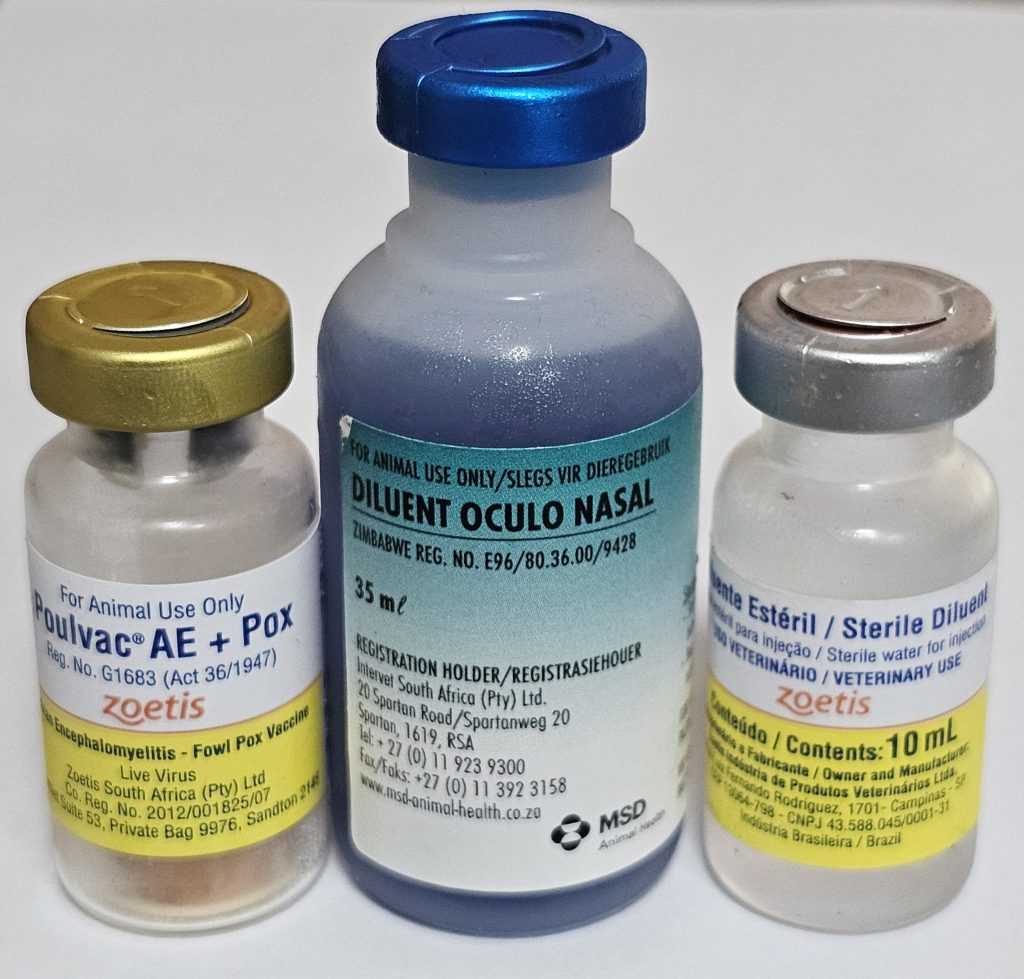
I use Zoetis Poulvac AE + Pox, a vaccine that helps protect against both fowl pox and avian encephalomyelitis (AE) when used as directed. Zoetis South Africa product instructions.
I typically order mine from AnB Vet, as I have found them reliable. I suggest calling or emailing then with your orders. Midlands Veterinary Wholesalers is another supplier you can buy from. You can also check with other veterinary suppliers like ALZU or your local agricultural co-op.
The Zoetis vaccine I use comes with a clear diluent, some other vaccinations do come with a blue diluent. I have used a separate blue diluent because the colour makes it easier for me to see liquid on the needle and see the application mark afterwards. In my own setup, I used the same volume as the supplied clear diluent. Matching the volume alone cannot establish whether another diluent is compatible.
The Needles
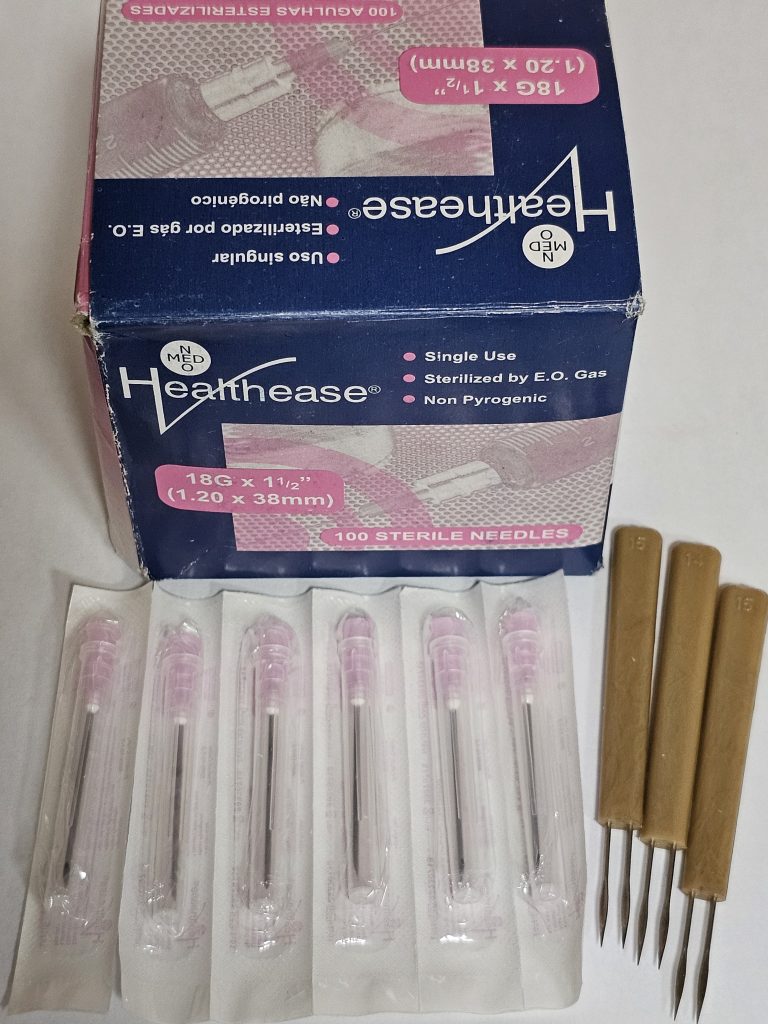
Wing-web vaccination normally uses a special two-pronged applicator. I have tried these tools and find that they become blunt quite quickly when I vaccinate large numbers of chickens.
In my own flock I have used ordinary 18G needles, which have pink hubs. I keep spares within reach and have generally replaced mine about every 15 minutes, sooner if they feel blunt, and straight away if dropped or contaminated.
Preparation Is Everything
Zoetis gives a one-hour window for Poulvac AE + Pox after mixing. Follow the timing on your own product’s package insert.
You cannot mix the vaccine, start gathering chickens, chase a few around the garden and then expect to take your time vaccinating them.
I sometimes work with hundreds of chicks, so preparation makes an enormous difference. Before I even open the vaccine, I collect the birds I intend to vaccinate and put them in crates.
I set up a small camping chair next to the crates, with my vaccine, equipment and spare needles within easy reach. I take one bird out at a time, vaccinate it and release it before moving on. This lets me work efficiently and keep track of which birds I’ve done.
Only once the birds and equipment are ready do I mix the vaccine. I then set my one-hour timer.
Keeping the Vaccine Cool
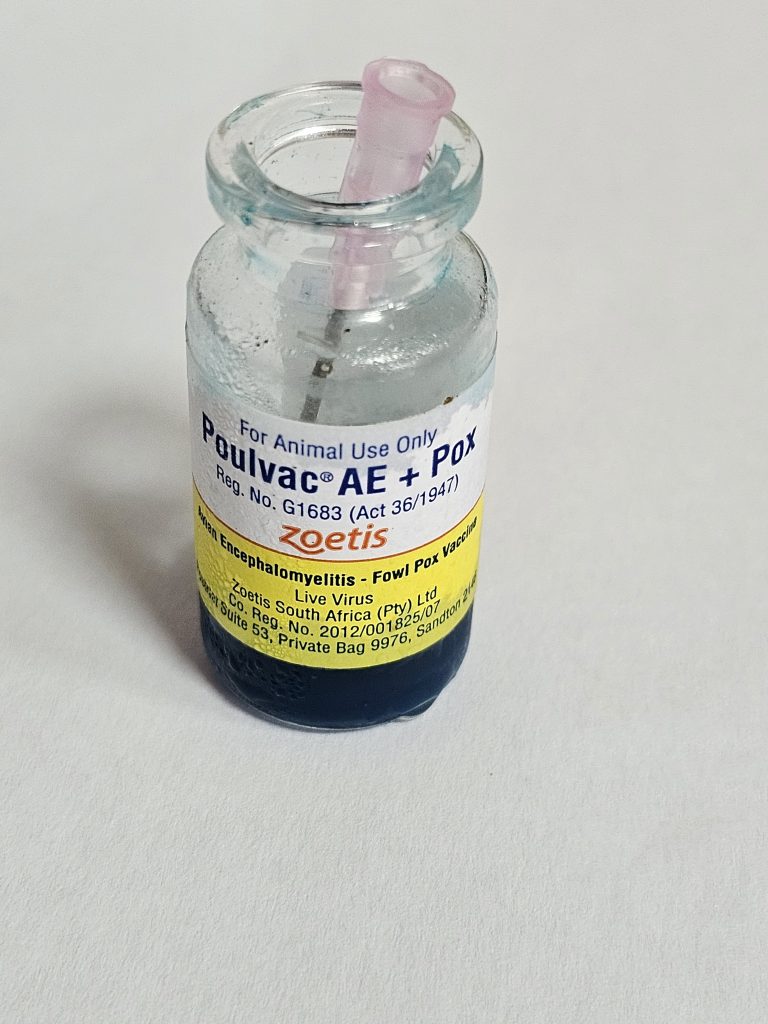
I use a small polystyrene cooler box. I put a single layer of ice at the bottom, add some water and place a kitchen towel inside to keep the vial upright. I keep the cooler next to my chair so I can reach the vial easily.
I once accidentally froze the vaccine while trying to keep it cool. I now pay close attention to how I store it while I work. Follow the storage and handling directions for your vaccine.
Checking the Needle Each Time
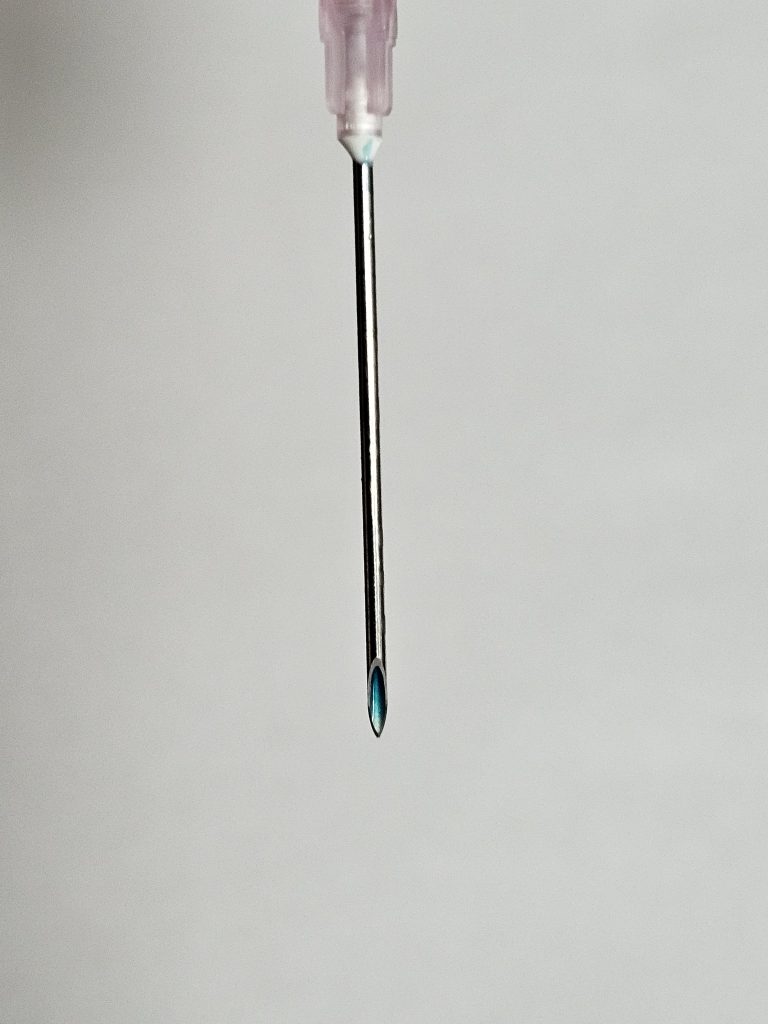
Before vaccinating each chick, I check that the needle has picked up liquid. With the blue diluent, I can see the liquid in the opening of the needle when I lift it out. If I cannot see it, I dip the needle again.
This visual check tells me there is liquid on the needle. The colour does not measure the amount delivered.
Vaccinating the Wing Web
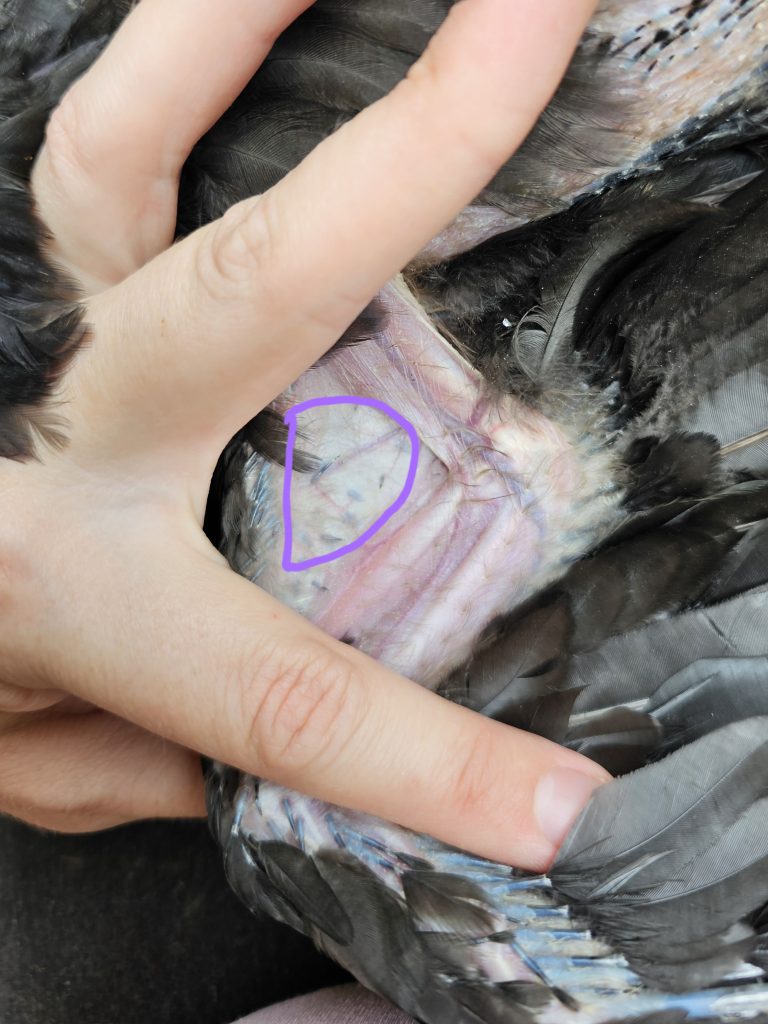
The wing web is the thin membrane of skin beneath the wing. I spread the wing and look for a clear spot in the membrane. Blood vessels are usually visible through the skin. When feathers have obscured the spot, I have sometimes plucked a few so I could see it more clearly.
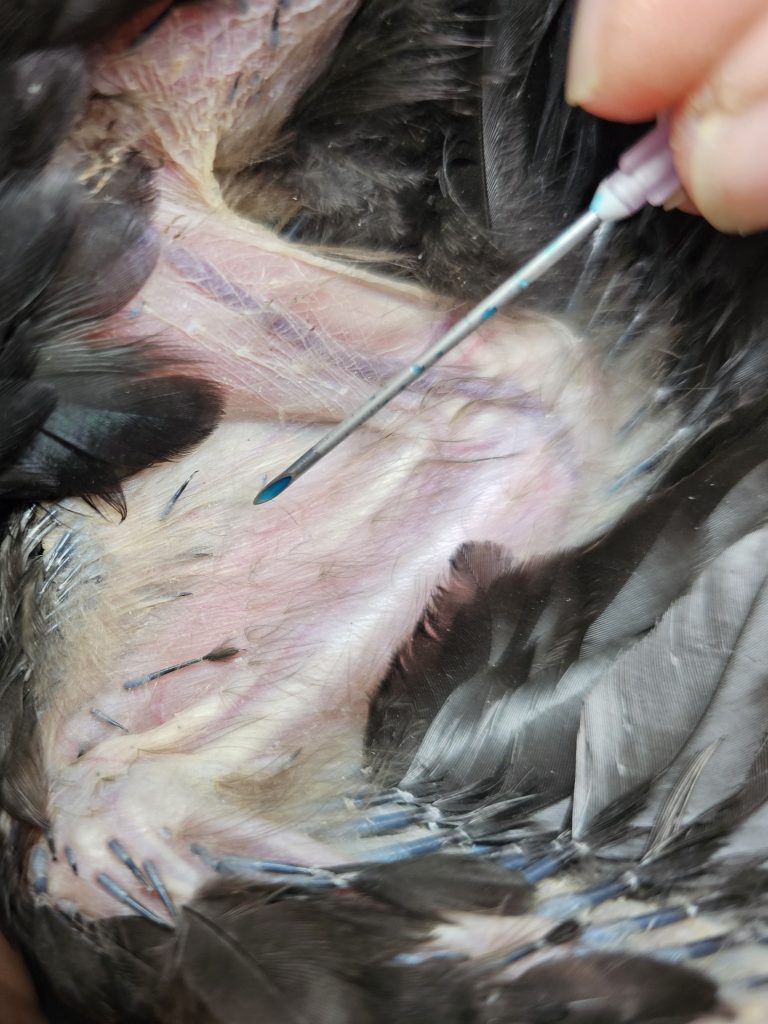
I pass through the wing web at the spot I’ve selected. Zoetis directs users to pass the specified applicator through the membrane, avoiding blood vessels, bone and muscle. Zoetis South Africa wing-web instructions.
Some people vaccinate both wings, I do only one with the needled and that has been sufficient for me.
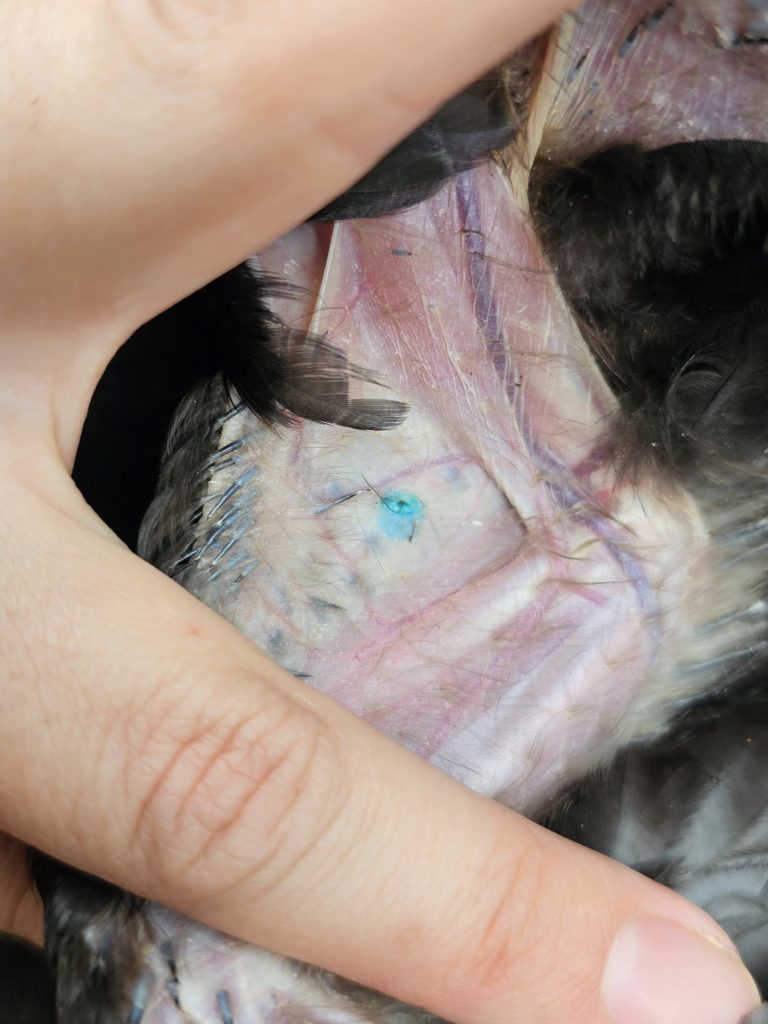
Afterwards, I look for the little blue mark. It makes the application site easy to see if I’m ever unsure whether I’ve already vaccinated that bird. The mark shows where liquid touched the skin. I check for a vaccine take later.
Once I’m finished, I release the chick and move on to the next one.
Checking Whether the Vaccination Has Taken
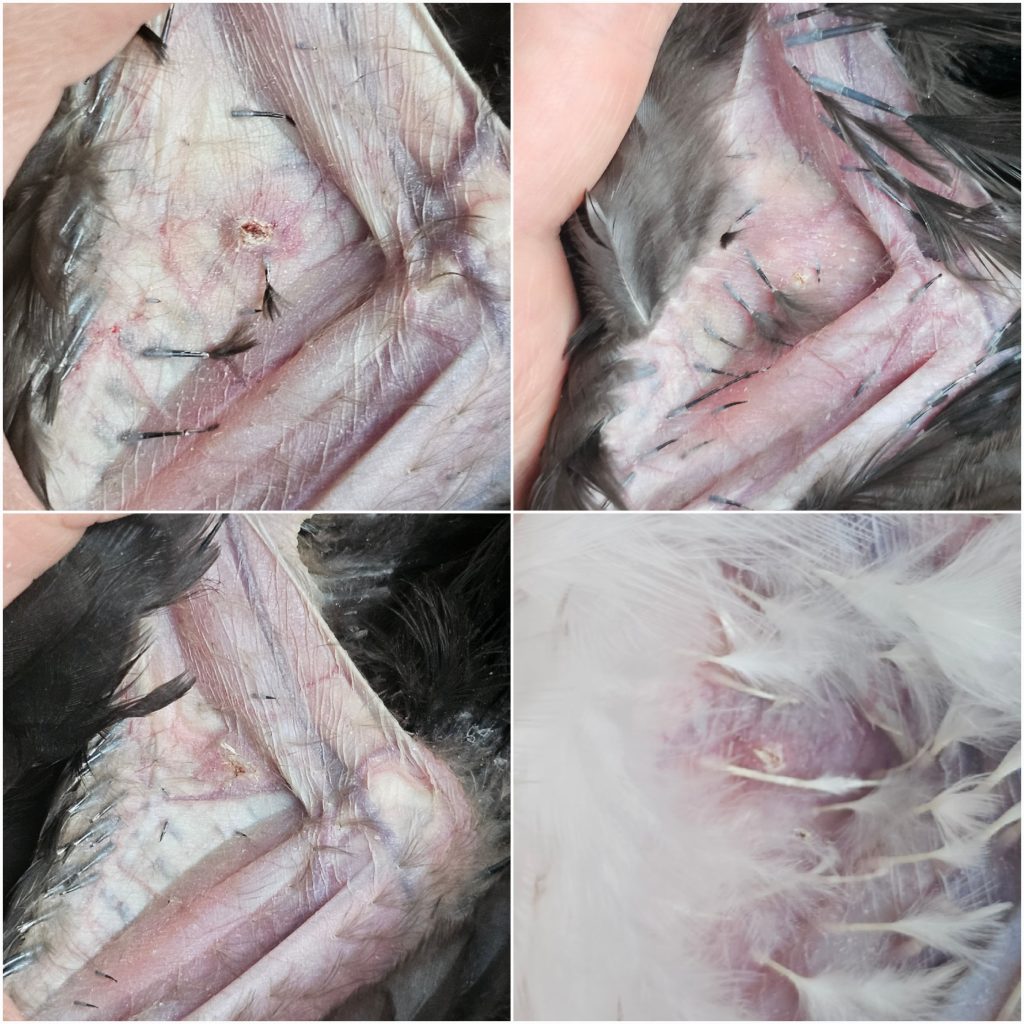
Administering the vaccine is only half the process. I normally inspect the birds about one to two weeks later. The photographs above were taken about two weeks after vaccination and show some of the local reactions I have observed.
A local reaction is often called a take. Zoetis describes swelling that can appear within the first week and may be followed by a small scab. Follow the product’s instructions for when to check. Zoetis South Africa on the expected response.
The reactions in my photos vary. I look for the expected local response, and I would ask a poultry veterinarian about excessive or worsening inflammation or a wound that looks infected.
Final Thoughts
Over the years, this approach has worked well for me, and I have experienced relatively few cases of fowl pox among my vaccinated chickens.
For me, preparation makes the biggest difference. Collecting the birds and laying out my equipment before mixing means I can spend that hour vaccinating instead of chasing chickens.
I also make time to check the sites afterwards for the reaction I expect to see. These are my personal methods and observations, shared in the hope that other chicken keepers may find them useful.